



St. Eustatius, Lesser Antilles, February 1739: Pen in hand, the thirty-eight-year-old German scratched a few stanzas on rough paper as he looked over the Caribbean Sea. But this was no vacation for the aristocrat-turned-missionary-statesman.
Count Nikolaus Ludwig von Zinzendorf (1700–1760) had just left the island of St. Thomas.1 As leader of the Moravians, he had come to intercede on behalf of the missionaries he had helped to send to reach the local residents with the gospel. Some Moravian missionaries around the world were willing to become slaves to reach the slaves. On St. Thomas, one missionary had married an Afro-Caribbean former slave, and the couple had become prisoners for their beliefs. Zinzendorf had used his aristocratic position to free them so they could return to their gospel work on the island.
Now, on the return journey, Zinzendorf contemplated the reason he was in the Caribbean and the center of his life: the gospel of Jesus Christ. He had plenty of time onboard the ship. So, he wrote thirty-three stanzas on the substitutionary work of Christ!
The very next year, John Wesley heard the hymn and immediately translated it from German to English. God had used Moravian missionaries in his own life to help him understand the gospel. And he loved this hymn’s articulation of these truths. Translation of poetry is no easy task. In the process, Wesley cut the hymn down to twenty-four verses. As with Zinzendorf’s original German lyrics, Wesley’s English version served as a doctrinal catechism for congregations across the world as they sang and memorized these truths about Christ and salvation in Him alone.
Today, most hymnals only include four or five verses. Let’s look together at the most frequently sung stanzas. We will examine the Scriptural quotes and allusions. May these truths once again inspire us to live for Jesus who “lived and died for me.”
1. Joy in Jesus’ Blood and Righteousness
(1) Jesus, thy blood and righteousness
my beauty are, my glorious dress;
‘midst flaming worlds, in these arrayed,
with joy shall I lift up my head.
The first stanza points directly to Jesus–His blood and His righteousness. Though Zinzendorf dressed as an aristocrat, he boasted in being clothed in Jesus’ righteousness. The author echoes the joy of Isaiah 61:10: “I will greatly rejoice in the LORD, My soul shall be joyful in my God; For He has clothed me with the garments of salvation, He has covered me with the robe of righteousness, As a bridegroom decks himself with ornaments, And as a bride adorns herself with her jewels.” This truly is beauty and glorious dress! When the world ends in flames of judgment, those clothed in Jesus’ blood and righteousness will rejoice.
Zinzendorf may also allude to Zechariah 3:3–5. Here, Christ, the Angel of the Lord, replaces the post exilic high priest Joshua’s filthy garments with clean, rich robes. This substitution pictures Christ’s work: “For He made Him who knew no sin to be sin for us, that we might become the righteousness of God in Him” (2 Corinthians 5:21). Jesus’ blood provides us His righteousness before God.
2. Confidence through Jesus’ Blood and Righteousness
(2) Bold shall I stand in that great day,
for who aught to my charge shall lay?
Fully absolved through these I am,
from sin and fear, from guilt and shame.
The second stanza builds from joy to confidence in Christ. Zinzendorf alludes to 1 John 4:17–19 which affirms that boldness on judgment day springs from His love for us. Borrowing a phrase from Romans 8:33–34, the hymnist further explains the reason for his assurance of salvation: “Who shall bring a charge against God’s elect? It is God who justifies. Who is he who condemns? It is Christ who died, and furthermore is also risen, who is even at the right hand of God, who also makes intercession for us.” Because of Christ’s work, there is no room for fear, guilt, and shame.
Interestingly, Zinzendorf hits on some rather modern concepts. In recent years, missiologists have observed characteristics of various cultures and applied their findings to the gospel message. They note that more Western cultures, like Zinzendorf’s native Germany, respond more to guilt. Other people groups, like the Caribbean residents he had just met, tend to react in fear. Eastern cultures often regard shame over either guilt or fear. Out of these observations emerged the 3D gospel which recommends tailoring gospel presentations to reach different cultures. In another post, I have discussed the validity of this recent approach. However, in this ancient hymn, Zinzendorf addresses freedom in Christ from all these results of sin–guilt, fear, and shame.
3. Mercy from Jesus’ Blood and Righteousness
(3) Lord, I believe thy precious blood,
which at the mercy seat of God
forever doth for sinners plead,
for me, e’en for my soul, was shed.
Next, Zinzendorf describs propitiation at the mercy seat (Exodus 25:17–22; Leviticus 16:14–15). He restates Romans 3:25 in poetic form: “Whom God set forth as a propitiation by His blood, through faith, to demonstrate His righteousness.” In propitiation, God’s just wrath on our sin is satisfied by Jesus’ blood on our behalf. This mercy extends from the cross into eternity as the hymnist alludes to Hebrews 7:25: “He is also able to save to the uttermost those who come to God through Him, since He always lives to make intercession for them.”
4. Ransom Offered All through Jesus’ Blood and Righteousness
(4) Lord, I believe were sinners more
than sands upon the ocean shore,
thou hast for all a ransom paid,
for all a full atonement made.
In the Caribbean, the German missionary leader probably saw more sand than he had ever seen in his life, and he brings this picture into his hymn to describe the extent of Jesus’ substitutionary work. His words echo Scripture’s frequent emphasis on the unlimited availability and complete sufficiency of Christ’s atonement. First Timothy 2:6 declares that Jesus “gave Himself a ransom for all.” Hebrews 2:9 reveals that He “taste[d] death for everyone.” First John 2:2 clearly states that His propitiary work was intended for all: “He Himself is the propitiation for our sins, and not for ours only but also for the whole world.” God “desires all men to be saved” and “commands all men everywhere to repent” because “He died for all” (1 Timothy 2:4; Acts 17:30; 2 Corinthians 5:14–15; Isaiah 53:6; Romans 5:18; John 1:9; 3:16–18, 36; 2 Peter 3:9). As Zinzendorf penned in this hymn in the 1700s, Christ paid the ransom for all and made full atonement for all.
5. Hope Because of Jesus’ Blood and Righteousness
(5) When from the dust of death I rise
to claim my mansion in the skies,
e’en then this shall be all my plea,
Jesus hath lived, hath died, for me.
Finally, Zinzendorf writes of hope for the future–life after death because of Jesus’ blood and righteousness. He references John 14:1–3 and the place Jesus has prepared for us. We need not worry or be afraid. As the apostle Paul stated in Romans 14:8–9, Jesus lived and died for us. Though we, like many of the missionaries Zinzendorf served, die before Jesus returns, we all have the same plea to Jesus, the “Lord of both the dead and the living.” We, too, shall rise (Daniel 12:2).
Conclusion: Old Hymn, Relevant Truths, Eternal Message
Jesus’ blood and righteouosness is our joy, confidence, and hope. Mercy and ransom are ours in Him alone. We share this salvation with our brothers and sisters in Christ from previous centuries. We sing these truths from Scripture with them across many nations and languages. One day, we will stand together before the throne of God, rejoicing in Jesus’ blood and righteousness.
Zinzendorf’s Story
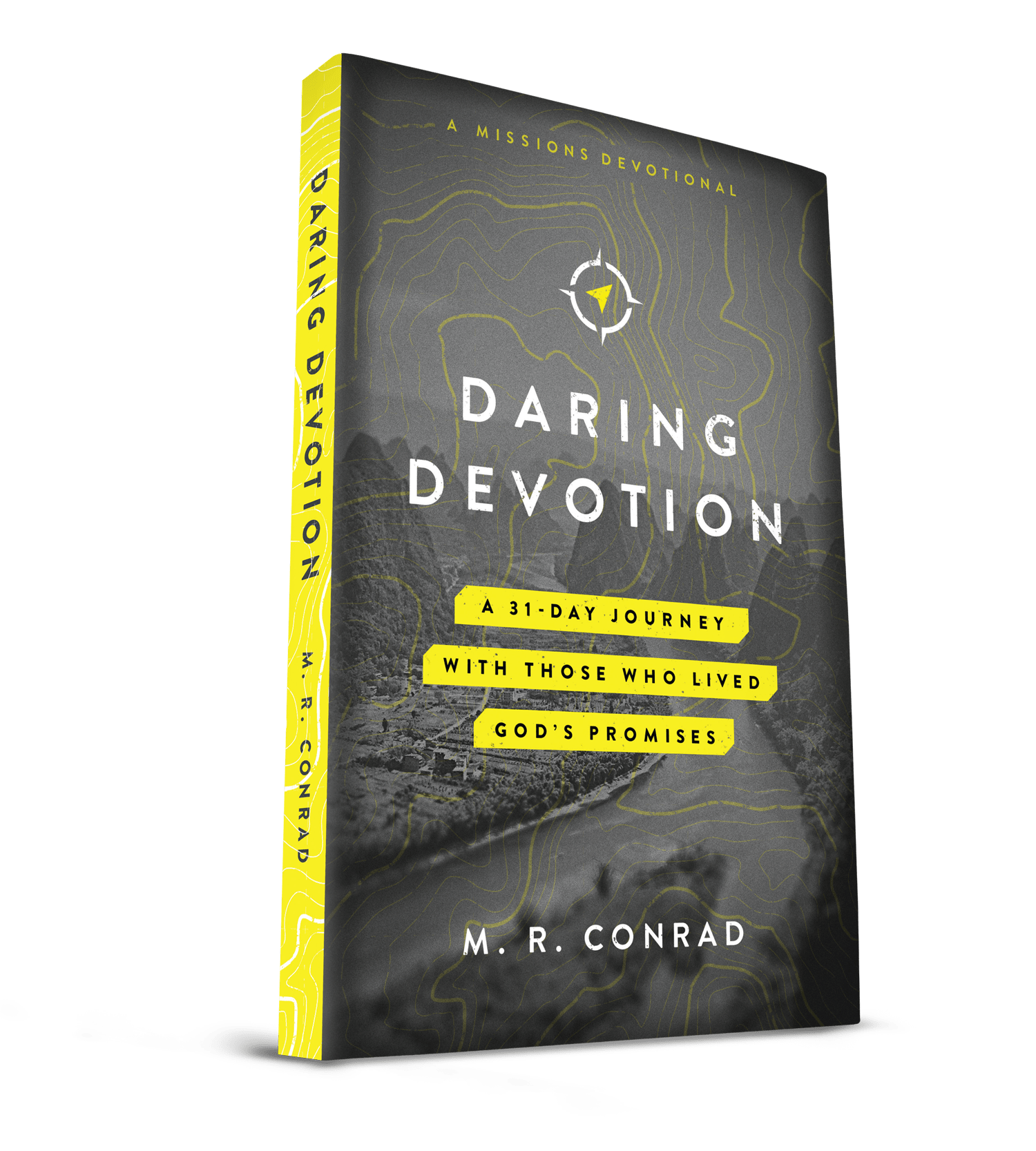
For more about Count von Zinzendorf and the Moravian missionaries of the 1700s, read my short devotional on Day 30 of Daring Devotion: a 31-Day Journey with those who Lived God’s Promises.
- John R. Weinlick, Count Zinzendorf (Nashville: Abingdon Press, 1956), 144–147. ↩︎
Photo Credit: Jametlene Reskp on unsplash
Discover more from Rooted Thinking
Subscribe to get the latest posts sent to your email.
